Stay Connected Abroad Your Complete Guide to International eSIM Plans
Tired of hunting for local SIM cards or facing sky-high roaming bills the moment you land abroad? International eSIM technology eliminates this hassle by letting you download a digital SIM profile directly to your phone before you even travel. Once activated, it instantly connects you to local networks in over 200 countries, keeping you online with affordable data from the very first step off the plane. Activation is as simple as scanning a QR code or installing a carrier app, so you can ditch physical cards and enjoy seamless, pay-as-you-go connectivity wherever you go.
What Makes Global Connectivity Easier Than Ever Before
International eSIMs eliminate physical SIM swaps, letting you activate a local data plan in seconds via a QR code before you even depart. No more hunting for kiosks or hidden SIM cards upon arrival. This instant, over-the-air provisioning means global connectivity is now a seamless, pre-departure setup, letting you land connected.
You retain your primary number for calls while a secondary eSIM profile delivers high-speed data in over 190 countries, transforming complex roaming into a single, invisible tap.
All management lives in a single app, removing the friction of juggling multiple physical cards and freeing you to move between destinations without a single trip to a store.
The Shift from Plastic SIMs to Embedded Profiles
The shift from plastic SIMs to embedded profiles erases the physical hassle of swapping cards when crossing borders. Instead of hunting for a local SIM or carrying multiple plastic cards, an integrated chip allows you to download a new network profile directly to your device. This makes activating an international eSIM as simple as scanning a QR code or tapping an app, eliminating the risk of losing a tiny card. The hardware itself is permanent and out of sight, with the embedded profile technology enabling instant, on-demand connectivity that adapts to your destination without any physical exchange.
How Travelers Are Ditching Roaming Charges
Travelers are ditching expensive roaming charges by swapping physical SIM cards for eSIM instant activation. Instead of hunting for local SIM vendors or paying daily carrier fees, you scan a QR code before departure. Once abroad, your phone automatically connects to local networks, sidestepping unpredictable bills entirely. Data is purchased in flexible, pay-as-you-go bundles, so you only spend on what you actually use.
- Choose a regional or country-specific eSIM plan at home
- Turn off your primary SIM to block accidental roaming
- Top up data via an app instead of signing long contracts
Key Differences Between Local and Worldwide SIM Solutions
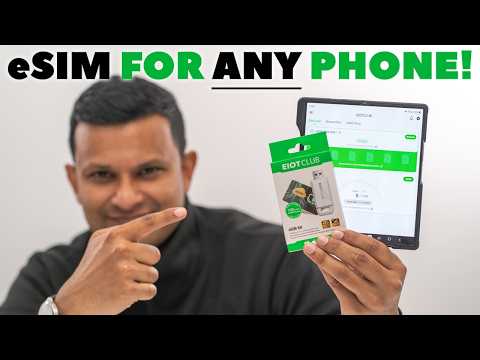
The key difference between local and worldwide SIM solutions centers on single-profile versus multi-network access. A local SIM binds you to one country’s specific carrier, requiring a new physical purchase or eSIM download per border crossing. In contrast, a worldwide eSIM uses a single digital profile that hops across multiple international networks automatically. This eliminates the need to hunt for a local vendor or juggle multiple SIMs on a trip. The sequence is simpler:
- Activate one global plan before departure
- Land and connect to the strongest local tower
- Roam across borders without swapping profiles
This reduces setup time from minutes per stop to seconds overall, making global coverage a passive feature rather than an active chore.

Choosing the Right Plan for Cross-Border Travel
Choosing the right plan for cross-border travel requires matching data volume to your itinerary and connectivity needs. First, evaluate coverage zones; a regional plan covering multiple countries is often more cost-effective than individual local eSIMs for a multi-stop trip. Consider your usage patterns: a plan with high-speed data is essential for navigation and streaming, while a lower-tier plan suffices for messaging. Check plan validity—ensure it spans your entire travel duration, as many pre-paid options auto-expire. Finally, verify if the plan supports tethering, which is critical for sharing a connection across devices.
Data-Only vs. Voice-and-Data Packages
When picking an international eSIM, your main choice is between data-only vs. voice-and-data packages. Data-only plans are perfect for staying online with maps, messaging apps, and social media, especially since you can make voice calls over Wi-Fi or apps like WhatsApp. Voice-and-data packages add a local phone number for traditional calls and SMS, which is handy for booking hotels or two-factor authentication. If you rarely dial direct numbers, save money with data-only. If you need a reachable number for confirmations or emergency calls, the combo pack wins. Think about how you actually communicate across borders.
Prepaid Options for Short Stays and Extended Trips
For short stays, prepaid eSIMs with daily data passes are ideal—just activate a 3, 5, or 7-day plan that covers your exact travel dates. No contract, no hassle. For extended trips, look for regional or global prepaid eSIMs with longer validity, like 30 or 60 days, offering higher data caps to save money over time. The key is matching your travel length to a plan’s expiration—short hops stick with brief passes, while longer journeys benefit from bulkier prepaid bundles. Both options let you pay upfront and stay connected without surprise fees.
Comparing Regional Coverage Across Continents
When comparing regional coverage across continents for your international eSIM, think about where you’ll actually spend most of your time. A Europe plan might cover 40 countries seamlessly, but that same provider’s Asia-Pacific offer could skip smaller islands or rural areas. To avoid surprises, focus on region-specific eSIM data packages rather than global ones, as they often include local roaming partners. For a clear comparison, follow this sequence:
- List the countries you’ll visit on each continent.
- Check each eSIM’s coverage map for those specific nations.
- Verify if high-speed data is consistent across urban centers and remote spots.
This way, you match network reach to your actual travel route.
Compatible Devices and Activation Steps
For an international eSIM, your device must be unlocked and eSIM-compatible; most modern iPhones (XR and later), Google Pixels (3a and later), and Samsung Galaxy S20-series and newer work. Activation is usually instant: scan a QR code sent via email immediately after purchase, or manually enter the provided activation code in your phone’s cellular settings. After adding the eSIM to the line, label it as “Data” or “Travel” to avoid confusion. Once added, simply enable data roaming for that line—your international data plan should activate within seconds, letting you connect on arrival.

Which Phones Support Embedded SIM Technology
Most modern flagship smartphones from Apple, Google, and Samsung natively support embedded SIM technology for international eSIM use. Since the iPhone XS, XR, and SE (2020) onward, Apple devices allow multiple eSIM profiles, ideal for global travel. Google’s Pixel 3 and newer models, including the Pixel 6 and later, also feature embedded SIM capability. Samsung supports eSIM in the Galaxy S20 series and newer, along with recent Z Flip and Fold devices. For international travel, verify that your specific model is eSIM-compatible for global roaming, as carrier-locked handsets or certain regional variants may lack activation support.
Scanning a QR Code vs. Manual Setup
Activating an international eSIM typically offers two methods: QR code scanning and manual setup. Scanning a QR code is the fastest and most error-free path; the device’s camera reads the embedded activation details, automatically configuring the profile. Manual setup requires entering the SM-DP+ address and activation code by hand, which is prone to typos. For a seamless experience, follow this order when choosing manual entry:
- Copy the SM-DP+ address exactly from your provider’s email or account.
- Enter the provided activation code (often alphanumeric).
- Confirm the profile details before completing installation.
While QR scanning is simpler, manual setup remains essential for devices without a camera or when the QR code fails to load. Both methods deliver the same result, but manual eSIM configuration demands careful attention to avoid connectivity errors while traveling internationally.
Common Issues During First-Time Configuration
First-time configuration of an international eSIM often fails due to incorrect manual entry of the activation code or QR scan in low light. Profile installation errors typically occur when device storage is full or when iOS/Android carrier settings are outdated. A missing or unselected “Data Roaming” toggle after installation frequently prevents network registration, even with valid credit. Dual-SIM setups on iPhone require clear designation of the eSIM for cellular data, as both lines may default to the primary physical SIM.
- QR code scanning fails if the screen brightness is too low or the code is partially smudged.
- Installing multiple profiles simultaneously can cause conflicting APN settings, leading to “No Service”.
- Activating before reaching the destination country often results in a pending status that does not resolve without a network refresh.
Cost Comparisons for Frequent Flyers
For frequent flyers, an international esim usually beats roaming fees if you hop between multiple countries each trip. Roaming charges pile up fast with daily fees per destination, while long-term esim plans from providers like Airalo or Holafly offer flat regional rates. Compare total trip duration and data needs before committing—a global esim can be cheaper than buying separate local sims for each stop. *Q: How do I know if a pay-as-you-go esim or a monthly plan is better for me? A: If you fly more than two weeks per month, a regional monthly plan saves you money over daily pay-as-you-go rates.*
Flat-Rate Plans vs. Pay-As-You-Go Models
For frequent flyers, the core cost decision hinges on data consumption patterns. A Flat-Rate Plan vs. Pay-As-You-Go Model determines optimal value. Flat-rate plans offer a fixed data allowance for a set price over a period, suiting travelers who need predictable spending and heavy daily usage across multiple countries. Pay-as-you-go models charge per megabyte, ideal for light users or those requiring emergency connectivity on a single trip. The former prevents bill shock but risks wasted data; the latter offers maximum flexibility but can become expensive with moderate use.
| Aspect | Flat-Rate Plan | Pay-As-You-Go |
|---|---|---|
| Cost Predictability | High, fixed upfront cost | Low, varies by usage |
| Best For | Heavy data users, multi-country trips | Light users, single-country visits |
| Risk | Unused data is forfeited | Unexpected overage charges |
Hidden Fees to Watch For When Switching Carriers
When switching to an international eSIM, watch for hidden reactivation fees that some carriers slap on your account. You might face unexpected charges for early termination or “service restoration” if you return to a previous provider. Scrutinize fine print for automatic top-up fees—these can drain your balance before you even use data abroad. Avoid carriers that bill for unused portions of a plan or charge extra for pausing your primary service. Always verify if your new eSIM requires a paid “profile transfer” if you change devices mid-trip. These small, buried costs can quickly turn a budget-friendly switch into a loss.
Savings for Business Travelers and Digital Nomads
For business travelers and digital nomads, an international eSIM eliminates costly roaming fees and the need to hunt for local SIM cards, directly reducing connectivity expenses. Global data plans often offer competitive per-gigabyte rates compared to standard carrier add-ons, especially when purchasing regional bundles covering multiple countries. A single eSIM profile for a month-long trip can cost less than two days of standard roaming charges. Additionally, avoiding physical SIM purchases saves time and potential airport markup fees. This simplicity allows nomads to allocate budget to other essentials, while businesses benefit from predictable, consolidated monthly billing across all employee travel.
Network Quality and Speed in Foreign Countries
When relying on an international eSIM, network quality and speed in foreign countries depend entirely on the local partner carriers your eSIM provider has negotiated access with. You will connect to the strongest available 4G LTE or 5G network in that region, but expect speeds to be throttled below what local postpaid subscribers receive. Always check which specific tier-1 carrier your eSIM uses for each destination, as budget plans often route through slower, congested MVNOs instead of the primary network. Critical real-world insight: latencies will be higher than domestic performance because your data may still be routed through a home-country gateway, making real-time apps like VoIP or competitive gaming noticeably laggy. Avoid eSIMs that advertise “unlimited” data at extreme speeds, as they nearly always deprioritize you during peak congestion. For consistent performance, select a regional or local eSIM provider that openly specifies their roaming partners.
How Providers Handle Tower Switching Abroad
International eSIM providers handle tower switching abroad by automatically prioritizing the strongest local signal without manual intervention. This seamless handoff between partner networks ensures uninterrupted connectivity while roaming. Providers dynamically select the optimal carrier based on real-time signal strength, latency, and congestion, often switching towers mid-session to maintain speed. Some advanced eSIMs can pre-negotiate access to multiple local networks, enabling a near-instantaneous transition if one tower degrades.
- Automatic rerouting to a stronger carrier when the current signal weakens
- Multi-network profiles that allow instant fallback to a backup tower
- Real-time latency and speed analysis to choose the best Singapore eSIM available tower
- Seamless handovers during voice calls or data sessions with no dropped connection
5G Access and Throttling Policies
When using an international eSIM, 5G access and throttling policies vary by provider. Some plans grant full 5G speeds on local networks, while others cap speeds to 4G levels regardless of device capability. Throttling commonly occurs after a high-speed data allowance is depleted, dropping the connection to sub-4G rates. Roaming partners may also enforce latency thresholds, making real-time 5G performance inconsistent. Check whether your eSIM explicitly lists “5G” access and its exact post-throttle speeds, as providers often market “unlimited” data but apply strict speed limits after a few gigabytes.
User Reviews on Latency and Streaming
User reviews frequently highlight that international eSIM latency for streaming varies significantly by destination. Many users report smooth 1080p video on YouTube and Netflix in major European cities, but note buffering on 4K content. In regions like Southeast Asia, reviews describe acceptable latency for music streaming but choppy performance during live video calls. Travelers often mention that streaming from local servers works better than from home-country services. Q: Do user reviews confirm eSIMs handle live sports streaming reliably? A: Most reviews indicate that live sports work on stable networks, but occasional latency spikes cause a 10–20 second delay compared to local SIMs.
Security and Privacy Considerations
Using an international eSIM introduces specific security and privacy considerations distinct from physical SIMs. The embedded profile is remotely provisioned, meaning your device’s connection to a foreign network relies on a remote SIM provisioning (RSP) platform, which must be trusted not to leak your IMSI or location data. Your primary risk is data exposure through the eSIM’s operator app or the QR code activation process, as these can be vectors for malware if sourced from unverified providers. Only download eSIM apps from official app stores and scan QR codes from trusted sources directly. Unlike a physical SIM that can be removed, an eSIM is tied to your device’s hardware, making it critical to remotely erase or lock the eSIM profile if your device is lost or stolen to prevent unauthorized network access. Always use the device’s native eSIM management menu to delete a profile before factory resetting. Your local browsing session is not inherently more secure just because you switched to an international eSIM.
Encryption Standards in Short-Term Plans
For short-term international eSIM plans, encryption standards directly dictate data confidentiality during transient network sessions. These plans typically employ AES-256 encryption for over-the-air provisioning and traffic, ensuring that subscriber identity and session keys are protected against interception on foreign infrastructure. Unlike permanent contracts, the encryption handshake must complete rapidly, often using elliptic curve Diffie-Hellman (ECDH) for ephemeral key exchange. This prevents residual data exposure after plan expiry. Without these cryptographic protocols, temporary network access would leave voice and SMS metadata vulnerable, undermining the user’s privacy across multiple carrier networks.
Data Retention Policies Across Jurisdictions
When using an international eSIM, your connection hops through local carriers, each with their own data retention laws. This means your usage logs might be stored for months in one country, then deleted quickly in another. Privacy depends on where your data physically sits. Some jurisdictions require providers to keep records of who you called and when, which could be accessed by local authorities. An eSIM roaming in a strict retention zone stores more of your metadata than you might expect. Does the eSIM provider tell me which country’s retention rules apply to my data? Usually, yes—check their privacy policy for their “home” jurisdiction, as that often governs your logs.
Risks of Public Wi-Fi and SIM-Based Protection
When using an international eSIM, connecting to public Wi-Fi exposes your traffic to man-in-the-middle attacks, credential harvesting, and data interception on unencrypted networks. SIM-based protection mitigates this by routing your session through the eSIM’s native mobile data, which is inherently encrypted over a cellular link rather than a shared hotspot. This approach eliminates the need to trust a third-party network operator. Even with an eSIM, avoid turning off mobile data when joining public Wi-Fi, as the fallback cellular path secures sensitive transactions like banking. The primary risk shift is from insecure Wi-Fi endpoints to the eSIM provider’s network security.
| Risk Aspect | Public Wi-Fi Exposure | eSIM SIM-Based Protection |
|---|---|---|
| Data visibility | Plaintext or poorly encrypted | Cellular encryption (AES) |
| Attack surface | Rogue access points, sniffer tools | Provider network boundaries |
| User control | None after joining network | Direct carrier security protocols |
Future Trends in Roaming-Free Communication
Future trends in roaming-free communication will see international eSIMs evolve into dynamic, multi-network aggregators. Devices will automatically select the strongest local carrier for data, eliminating manual profile swaps and ensuring seamless connectivity across borders. A single eSIM will likely manage multiple virtual profiles, dynamically switching between them based on real-time signal strength and latency. This will enable uninterrupted voice-over-IP (VoIP) calls and high-definition video streaming without any carrier handshake delays. Passive data caching on the eSIM could pre-fetch network credentials for upcoming destinations, making border crossing truly instantaneous. Ultimately, international eSIMs will transition from a substitute for physical SIMs to a self-optimizing, context-aware connectivity layer that prioritizes user experience over manual settings.
Integration with IoT and Wearable Tech
International eSIMs are seamlessly integrating with IoT and wearable tech, enabling smartwatches, fitness trackers, and asset tags to maintain connectivity across borders without a physical SIM. This allows users to receive calls, stream maps, or sync health data directly on their wrist while traveling, bypassing the need for a paired phone. For example, a runner exploring a new city can use eSIM on their smartwatch for real-time navigation and emergency alerts, all under a single roaming data plan. This unlocks persistent connectivity for portable devices, making international travel more efficient. Q: Can a smartwatch with an eSIM replace a phone abroad? A: Yes, for core functions like messaging, calls, and GPS, it can function independently of your primary phone.
Evolving Regulations in Cross-Border Data
As roaming-free communication expands, evolving data sovereignty rules are reshaping how international eSIMs function. You must now verify that your virtual profile stores personal identifiers—like location logs—on local servers, not foreign ones, to comply with regional mandates. Some destinations require explicit, granular consent for each cross-border data transfer, impacting how seamlessly your eSIM connects. A European profile might automatically halt data relay when you cross into a territory with stricter processing laws, forcing a manual re-authorization. These shifts mean your eSIM’s performance hinges on real-time regulatory adaptation, not just coverage.
| Regulatory Aspect | User Impact on eSIM |
|---|---|
| Local storage mandates | Reduced latency but potential data gaps between regions |
| Consent re-authorization | Interrupted connectivity until you confirm data use rules |
| Dynamic compliance switching | Automatic profile adjustment, sometimes slowing handovers |
Predictions for Zero-Roaming Global Plans
Predictions for zero-roaming global plans suggest they will evolve into truly unified connectivity subscriptions that function identically across all countries without hidden throttling. Users can expect a single data pool, accessible at full speed whether in Tokyo or Toronto, managed directly through an eSIM app. Automatic network switching will become seamless, choosing the strongest local carrier without manual intervention. These plans will likely bundle voice and SMS via VoIP, erasing the distinction between domestic and international service entirely.
- Plans will feature a single, pay-per-gigabyte price applicable worldwide with no daily caps.
- eSIM profiles will pre-load multiple carrier agreements, enabling zero-delay activation upon crossing borders.
- Predictions include native support for tethering and hotspot use at no extra fee on all zero-roaming subscriptions.